The Chronicles of Erica · 2024
Anyone Need a Crumb Collector?
We are clearing out Grandmom's house. She's already settled in at the nursing home, reluctantly. I live close by, so I have been at the house all week packing teacups, glassware, odds & ends—the detritus left behind after fifty years in a house. I wrap everything in newspaper, my hands turning black as the tears fall and mix with ink.
I can't help the tears. Grandmom raised my uncle and dad in this house. My childhood Thanksgivings were enjoyed in this very dining room where I stand, boxing up treasures. If only the neighbor hadn't almost hit Grandmom with her car while she was on her daily walk. It was just so close—her backing the car out onto the street—and Grandmom crossing the threshold of her driveway at the same time. Horrified, the lady slammed on the brakes, but it had been enough. Just enough to startle an old lady and scare her grown sons into action.
And now, after decades of a daily mile—her denim wrap-skirt making "whisk, whisk" sounds as she walked briskly along—she is sequestered in a nursing home. She hates it there. She complains about the food, the country bumpkins she must share meals with, and the beeps and buzzers that keep her awake at night.
She misses her house. She wants to go home.
And here I am, her only Granddaughter, complicit in the plan to sell her home—wrapping up her treasures in newsprint. The betrayal. I want to stop the packing, grab my keys, drive the two hours to the fancy assisted living center where my uncle and dad have lovingly entrusted their treasure—their mother—and break her out.
I would bring her home. Help her put her feet up on the davenport so she could "just rest her eyes" while I fiddled with the rabbit ears on the TV until I found the gleaming white teeth of Lawrence Welk smiling out at us. I would brew us a pot of tea, fix her a liverwurst sandwich. But no, it's for the best. No matter how much she complains, she is safe and cared for at the "Court."
I console myself with this fact as I stand in the dining room, looking at the portrait of Paul Revere that hangs above the breakfront. He looks back at me with curious eyes, considering the situation. Where the Hell did she even get this painting? I say out loud—to no one—wiping tears from my eyes. Grandmom found treasure everywhere she went. She is a treasure herself. I shake off the melancholy, reminding myself that she is still alive and that the house is just a building, after all.
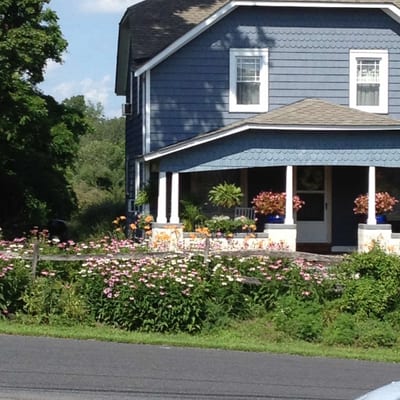
But it's not just a building—not to me. Grandmom's house, located a mere three blocks from my childhood home, is where I walked on lazy summer afternoons—arriving just in time to catch an episode of Days of Our Lives, my fifth-grade heart beating fast, knowing my mother would disapprove. It's where my older brother and I sat at the tiny kitchen table—drinking ginger ale in tin cups and crunching on big sourdough pretzels—regaling Grandmom with stories of teenage drama and intrigue. "Who is this girl you're dating, grandson? Isn't she older than you? She's out for fresh meat—you better watch it!"
"Grandmom, you're a riot!" we'd say, giggling into our cups. She'd look at us with a knowing smile, nodding her head.
She always knew what to say, how to make us laugh, and how to give us courage. In college, I was close enough to stop over on weekends. One Saturday in autumn—as I waited for some friends to pick me up from Grandmom's house for a camping trip—I paced back and forth, full of nervous energy. Raising an eyebrow, she wondered aloud, "I guess we have a crush on one of the fellas going on the trip…" I stopped, turned, and looked at her in astonishment. "How did you know?" She only smiled, walked to the sideboard, and poured me a shot of whiskey.
I look over there now—the decanters, gone—already packed with the other items. So is the candy dish that held Jolly Ranchers, parceled out after a special meal. The high school portraits of her sons—that held court on the breakfront for thirty years—are in the bottom of the box in front of me.
How does one pack up a life?
Room for one more item, I reach for the Fuller crumb collector—an odd little rectangular device used to sweep up crumbs from the table. And what am I gonna do with this little thing? My brother and I used to fight over it, always wanting to be the one to run the bristles over the cloth—to feel the satisfaction of a job well done—to know we had made our Grandmom happy. How can I make her happy now? The question overwhelms me.
A car beeps in the driveway. The cavalry has arrived—my uncle and cousin in the van, my husband in the truck behind them.
I go to the door to greet them, opening it wide, waving from the porch. Just like Grandmom would.